PSOs Are Leading The Way In Patient Safety. Better Technology Can Multiply Their Impact.
The HHS OIG's issue brief on the PSO program validates the work PSOs do. It points to AI and newer technologies as the way past the program's infrastructure barriers. Here we show how the right technology can turn three of those barriers into opportunities.
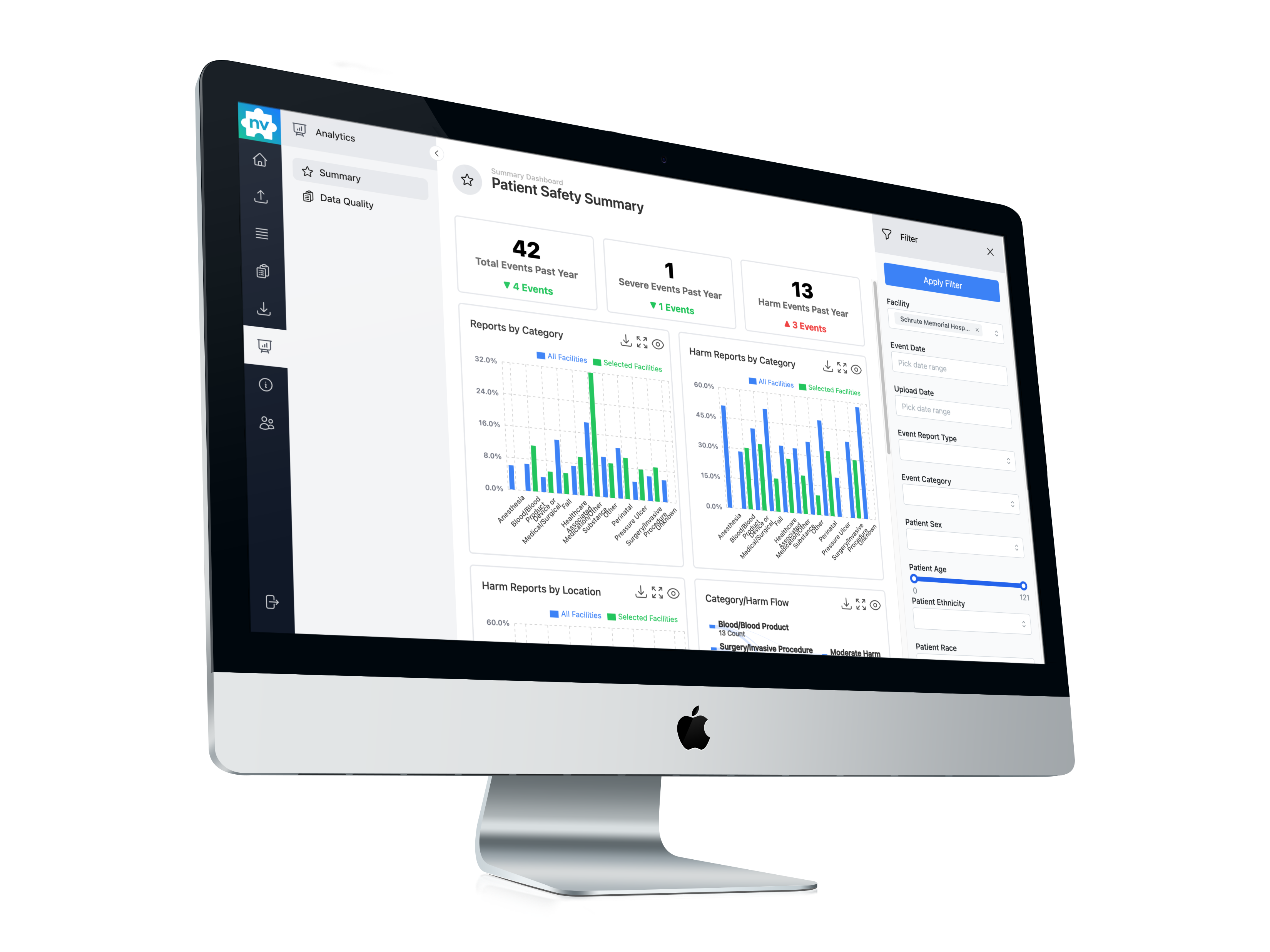
In September 2025, the HHS Office of Inspector General released an issue brief on the Patient Safety Organization program (OEI-01-24-00150). Some of the coverage framed it as a critique. We viewed it more as a validation of what PSOs do, and an opportunity to address infrastructure barriers holding back a program that can meaningfully improve patient safety.
OIG's own prior work found that nearly all hospitals working with a PSO found the relationship valuable, and AHRQ notes the program has grown more than 30% since 2019, with 132 PSOs listed today. Individual PSOs have demonstrably improved safety at their member hospitals. The problem OIG identifies isn't the work PSOs do. It's that the national infrastructure hasn't made that work as easy or as connected as it should be.
The report's fourth recommendation highlights the outdated technologies in the patient safety space. We believe AHRQ should harness AI and newer technologies to address the barriers facing the program. That has been a core belief at NewVolt, and has factored into our product development. PSOs don't have to wait for federal infrastructure to catch up to start benefiting.
Here are three barriers OIG describes, and how the right technology turns each one into an opportunity.
Opportunity 1: Make data standardization effortless instead of burdensome
OIG found that mapping event data into AHRQ's Common Formats is one of the biggest operational lifts a PSO faces. Member hospitals report events in whatever their systems produce: various incident reporting system exports, homegrown forms, and spreadsheets. Standardizing all of it takes real time and money. It's no knock on PSOs that many have built their own formats instead; they did what worked for their members.
This is exactly the problem the NewVolt Data Platform solves. Our ingestion layer takes reports from heterogeneous hospital and facility systems and standardizes them into a common schema, including the AHRQ Common Formats, through dynamic mapping. When a new member joins with a different system, onboarding their data doesn't mean starting a translation project from scratch.
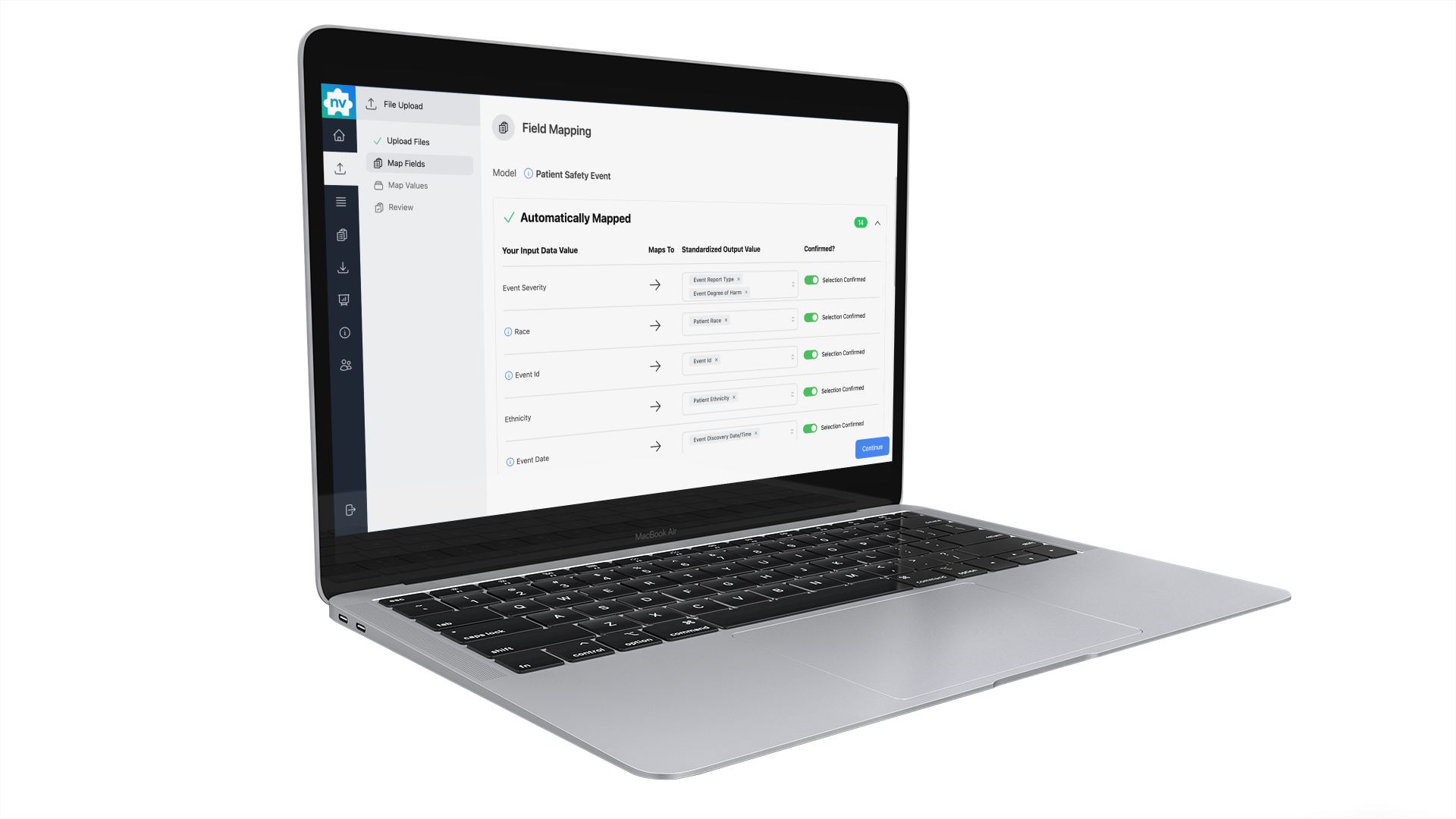
The OIG report suggests AI could automate this kind of mapping. That's exactly what we've built at NewVolt. It's how PSO Pulse works today for the Center for Patient Safety, whose members range from EMS agencies to small hospitals. About as varied as data sources get, all flowing into one standardized picture.
The payoff for a PSO: less staff time spent wrangling formats, more spent on the analysis and education your members actually joined for. What you do with standardized data downstream, whether that's internal analysis, member benchmarking, or national submission, is entirely your call. Our job is making sure the data is ready for whichever path you and your members choose.
Opportunity 2: Unlock the insight sitting in your narratives
PSOs collect incredibly valuable, actionable data. The narratives contain rich, first-person accounts of what actually happens at the point of care. One PSO told OIG it collects 500,000 event reports a year. The challenge has never been the data. It's that the most valuable part lives in free-text narratives that traditional tools can't analyze at scale.

The report points to AI and natural language processing as the way to change that, and we agree. PSO Pulse applies NLP directly to patient safety narratives: text embeddings for similarity search ("show me events like this one"), topic modeling that surfaces patterns across thousands of reports, and named entity recognition and classification that gives structure to free text.
Every NewVolt product also includes an AI Assistant that turns plain-English questions into charts, tables, and exports. Your safety analysts shouldn't need to write SQL to interrogate the data your members trusted you with.
This is how a PSO's analysis gets more granular and more actionable. It's the kind of feedback that made 80% of hospitals in OIG's earlier report say their PSO helped prevent future events.
Opportunity 3: Make reporting easier & affordable for the members who struggle most
Hospitals told OIG that duplicative reporting is a real burden: one format for CMS, another for the state, another for the PSO. And for smaller facilities, the barrier comes earlier. Enterprise incident reporting systems are expensive and complex, so some members have nothing structured at all.
We built NewVolt ERS for exactly those members. It's a deliberately low-cost, low-complexity event reporting system, a genuine option for the clinics, EMS agencies, and small hospitals that were never going to buy an enterprise platform. Events entered in ERS flow straight into PSO Pulse analytics, already standardized.

For a PSO, ERS works as a member benefit: instead of asking members to send data, you're handing them a tool that makes reporting easier than not reporting. More participation, better data, stronger membership value, all from removing friction rather than adding requirements.
PSOs are positioned to lead the next chapter
One more thing the report makes clear: AHRQ sees PSOs as key partners going forward. OIG recommends integrating PSOs into national research priorities and consulting them on aligning harm definitions, because PSOs have the relationships, the expertise, and the data that national learning depends on. AHRQ concurred with every recommendation.
That's a moment of opportunity. The PSOs that can standardize data efficiently, analyze narratives at scale, and make reporting painless for members will be the ones best positioned to lead, whether that means contributing to national research, demonstrating value to prospective members, or simply helping hospitals prevent the next harm event faster.
The federal infrastructure will evolve on its own timeline. Your capabilities don't have to.
If any of this maps to what your PSO is working on, we'd genuinely like to talk. We'll show you what we've built, tell you honestly where it fits and where it doesn't, and go from there.
Contact us, or reach out directly at hello@newvoltsolutions.com.
The full OIG issue brief (OEI-01-24-00150) is available at oig.hhs.gov.